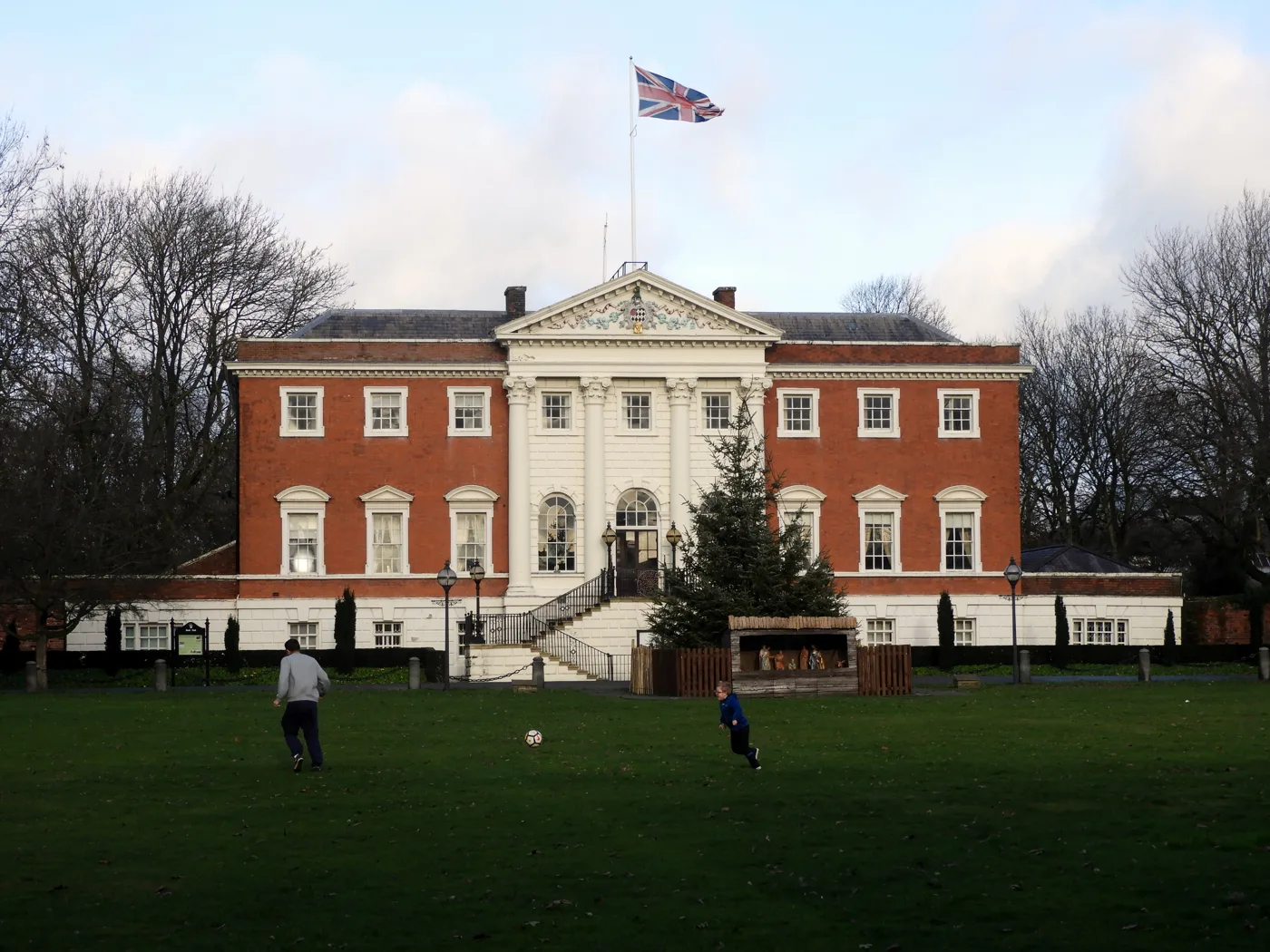

Warrington is rewriting the 2012 policy behind its home adaptation and repair money. The draft sets out eight discretionary routes. Comments close 4 December.
Warrington Borough Council is consulting on a new Housing Renewals Policy, the document that decides who gets help paying for a stairlift, a level-access shower, a ramp or an urgent repair. The policy it replaces was published in 2012.
The consultation opened on 11 September and closes on 4 December 2026. The council’s announcement mentions only Disabled Facilities Grants. The draft itself, an 18-page document dated August 2026, sets out a good deal more than that, and it is the document people are actually being asked about.
What the draft would offer
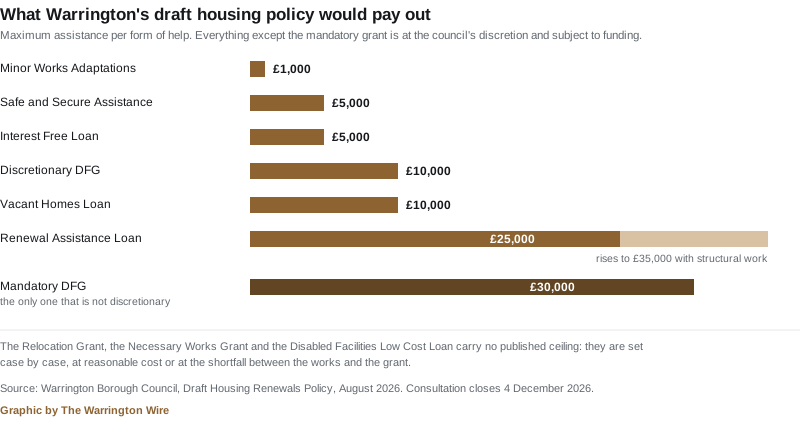
One grant is compulsory. Every other form of help in the draft is discretionary, which the policy states plainly: all assistance other than the mandatory Disabled Facilities Grant “is at the discretion of the Council and is subject to available staff and financial resources”.
| Help | Maximum | Who it is for |
|---|---|---|
| Mandatory Disabled Facilities Grant | £30,000 | Anyone who qualifies under the 1996 Act, after an occupational therapist assessment |
| Minor Works Adaptations | £1,000 | No application form, no repayment |
| Discretionary DFG | £10,000 | Owner-occupiers: unforeseen works, top-up above the £30,000 limit, or help with a means-tested contribution |
| Relocation Grant | Reasonable costs | Moving to a more suitable home, including stamp duty for owner-occupiers |
| Necessary Works Grant | Discretionary | Decluttering to let DFG works start, repairs to allow hospital discharge, dementia or sight-loss adaptations |
| Disabled Facilities Low Cost Loan | The shortfall | Owner-occupiers with equity. 5% simple interest plus a £100 admin fee |
| Safe and Secure Assistance | £5,000 | Category 1 hazard, vulnerable, on means-tested benefits. Two grants and £7,000 maximum in three years |
| Interest Free Loan | £5,000 | Essential safety works where Safe and Secure does not apply. Repaid over five years |
| Renewal Assistance Loan | £25,000, or £35,000 with structural work | Worst-condition homes, income under £16,040, council tax band A, B or C |
| Vacant Homes Loan | £10,000 | Bringing an empty property back into lettable condition. Repaid over up to seven years |
The conditions that catch people out
Most of this money is not a gift. The draft says so directly: apart from the mandatory grant, Safe and Secure grants and Necessary Works grants, assistance “should not be considered as being free”, and in most cases has to be repaid if conditions are broken or the property changes hands inside the condition period.
Worth knowing before you apply:
- A mandatory DFG over £5,000 can be reclaimed up to a maximum of £10,000 if conditions are breached, under the 2008 General Consent Order, and the charge is registered against the property
- For discretionary help that is not an adaptation, you must have owned and lived in the property for at least three years
- You cannot apply if the property is on the market, and an approved grant can be cancelled if you market it afterwards
- Tenants cannot apply if they are registered for rehousing, a waiting list or a home swap scheme
- A discretionary DFG puts a further land charge on the property for 10 years
- Relocation grants have a trap in the sequence: you must not have a property in mind, or have made or accepted an offer, before the occupational therapist assessment
The waiting list clause
Paragraph 6.3 of the draft gives the council a power worth reading twice. If resources become limited or demand rises significantly, it may place people referred for a Disabled Facilities Grant on a waiting list in strict date order before they are even invited to apply, with a letter explaining the position. Referrals judged urgent by adult or children’s social care would be prioritised.
That matters in a borough working through £51.243m of further savings, the second phase of a plan that went to cabinet on 9 September.
What is not in the draft
Comparing the draft with the 2012 policy still on the council’s website, several things have not been carried across. The 2012 document had chapters on the Affordable Warmth Grant, renewals assistance for HMOs and landlords, Renewal Areas and Group Repair, the area-based schemes for tackling whole streets of poor housing. None of them appears in the 2026 draft. The council has not said whether those programmes are ending or moving elsewhere.
Some numbers have not moved at all. Safe and Secure Assistance was capped at £5,000, with two grants and £7,000 in any three-year period, in 2012 and is capped at exactly the same figures now. The Renewal Assistance ceiling of £25,000, rising to £35,000 where there is structural work, was set in a revision dated 14 December 2004 and is unchanged. The income threshold for that help has risen from £15,460, last revised in January 2008, to £16,040 in the draft: an increase of £580 in eighteen years.
What it means for you
If you or someone in your household needs an adaptation, the route into all of this has not changed and does not start with a form. You contact the Adult Social Care First Response Team on 01925 443322 and ask for an occupational therapist assessment. A statement of need then goes to Private Sector Housing, which administers the grant. Work done before a grant is approved cannot be paid for.
If you want to influence what the policy says, the online survey is open until 4 December 2026, and the council says it particularly wants to hear from residents, carers, community groups, disability organisations and partner agencies. Paper copies and alternative formats are available on request from the Housing Standards and Assistance team. Read the draft first: the consultation asks about additional assistance that could be offered in future, which is the part of the form where the missing warmth and area-renewal programmes could be raised.
More Warrington information: council tax bands, house prices and planning news.
Have your say